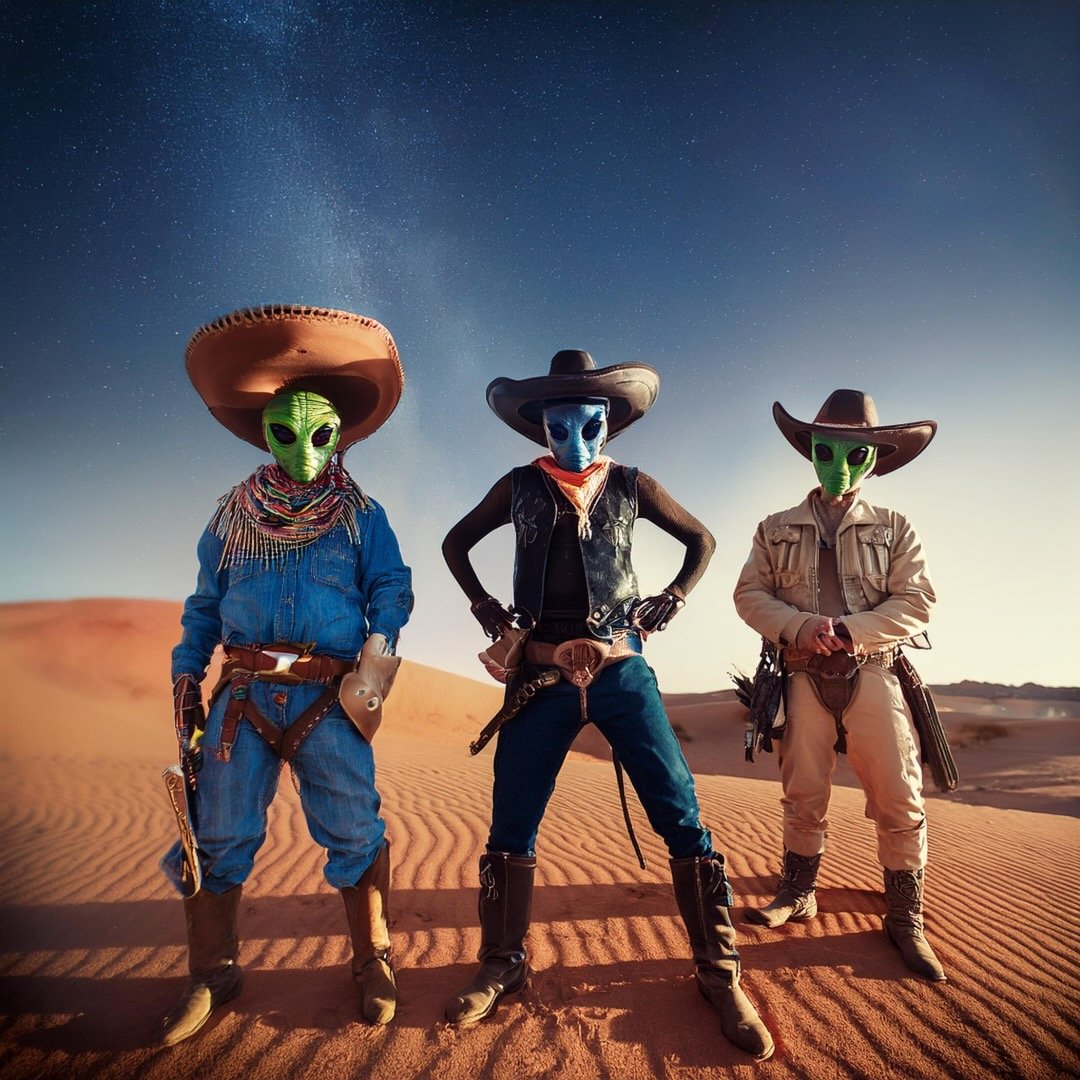
DISCLAIMER: This blog post is about an ongoing and very mysterious subject about UFOs/UAPs/USOs – please take everything with a grain of salt and decide for yourself. Knowledge is POWER!
Introduction to the Roswell Incident
The Roswell incident, one of the most famous events in UFO history, took place in July 1947, near the small town of Roswell, New Mexico. Initially, the U.S. military reported that a “flying disc” had been recovered after it crashed on a ranch, igniting fervent public interest and speculation. However, the military quickly retracted this statement, asserting that the debris was from a weather balloon, leading to widespread confusion and disbelief.
In the immediate aftermath, residents of Roswell were captivated by the reports, and interest in UFOs began to evolve rapidly. The U.S. military’s swift change in narrative fueled suspicions and ignited numerous conspiracy theories regarding extraterrestrial life and government cover-ups. This incident marked a pivotal moment in the history of UFO discussion, influencing popular culture and inspiring countless investigations into unidentified flying objects.
The implications of the Roswell incident extend beyond its dramatic public revelation. It has significantly shaped the dialogue around UFOs, making it a cornerstone of modern UFO lore. The event has prompted inquiries into the nature of aerial phenomena and the potential existence of advanced technology from another world. Over the years, numerous eyewitness accounts, government documents, and films have added layers to the narrative, leading to a complex web of theories, including those delving into wormholes as potential explanations for phenomena associated with UFO sightings.
The Official Narrative: What Happened in 1947?
The 1947 Roswell incident represents one of the earliest and most well-documented cases concerning unidentified flying objects (UFOs) in the United States. The official narrative begins on July 8, 1947, when the Roswell Army Air Field (RAAF) issued a press release claiming they had recovered a “flying disc” from a ranch near Roswell, New Mexico. This announcement quickly garnered significant media attention and public curiosity.
However, just a day later, the military retracted this statement, clarifying that the recovered object was, in fact, a weather balloon rather than an extraterrestrial spacecraft. This abrupt shift in explanation caused a wave of confusion among both the media and the general public, leading to speculation about what might have genuinely transpired during that fateful summer.
In the years that followed, multiple government representatives reiterated the balloon narrative, with the U.S. Air Force formally investigating the incident. These inquiries concluded that the original ‘flying disc’ claim was a result of a misunderstanding and that the debris found was part of a top-secret project known as “Operation High Dive,” which involved high-altitude balloon training and espionage tactics during the early stages of the Cold War.
The effort to quell the burgeoning UFO narrative included public relations campaigns aimed at restoring confidence in military transparency. However, the rapid shift from a dramatic alien encounter to a more mundane explanation led to lasting skepticism, creating fertile ground for conspiracy theories to flourish. This has resulted in a significant divide in public perception, with many continuing to believe in alternative interpretations of the events.
Thus, the tale of the Roswell UFO crash is primarily shaped by the official U.S. military account, even as it remains entangled in layers of speculation and cultural intrigue.
The Aftermath: Public Reaction and Media Coverage
The fallout from the 1947 Roswell UFO crash was immediate and profound, significantly influencing public perception regarding unidentified flying objects. In the days following the incident, initial excitement quickly morphed into skepticism as various news outlets began to sensationalize the event. The Roswell Daily Record, for instance, famously proclaimed that the military had recovered a “flying disc,” fueling a frenzy of interest. This coverage represented a pivotal moment in media history, as it marked the blend of journalistic practice and the arcane curiosity surrounding UFOs.
As reports proliferated, the public response was a mix of fascination and bewilderment. Individuals began to gather in Roswell, hoping to witness any remnants of the alleged crash. This grassroots phenomenon significantly escalated interest in UFOs, leading to the emergence of what would become a lasting UFO culture in America. Artifacts of this burgeoning culture included UFO-themed merchandise, dedicated societies, and frequent community events around the idea of extraterrestrial life.
The Roswell incident also acted as a catalyst for increased UFO investigations by both civilian and governmental organizations. Following the crash, numerous private groups dedicated to researching unexplained aerial phenomena were established. Moreover, the military’s eventual partial disclosure regarding their interest in UFOs raised more questions than answers, adding to the complexity of public sentiment. As sightings continued, media coverage expanded, often prioritizing sensational stories over scientific inquiry, which ultimately shaped the narrative surrounding extraterrestrial life.
Increasingly, the Roswell incident became emblematic of broader themes within popular culture, leading to numerous books, films, and documentaries that reflect society’s enduring fascination with potential extraterrestrial encounters. The combination of intense media scrutiny and public intrigue not only maintained the narrative of the Roswell crash but indelibly linked it to contemporary attitudes towards UFO phenomena.
In the wake of the 1947 Roswell incident, numerous investigations attempted to unravel the mysteries surrounding the purported crash of an unidentified flying object. Central to many of these inquiries was Jesse Marcel, an officer in the U.S. Army Air Forces, who played a pivotal role in the original recovery of debris. Marcel’s later assertions, particularly his claim that the material recovered was not of this Earth, ignited fierce debates that spanned decades. Initially, the U.S. military dismissed the crash as simply involving a downed weather balloon; however, Marcel’s statements later contradicted this official narrative, leading many to speculate on his credibility and the nature of the wreckage.
The conflicting accounts surrounding the Roswell incident have bred a plethora of theories, some of which argue against the notion of an extraterrestrial event while others lean towards confirming the alien narrative. Skeptics suggest that the phenomenon can be explained through terrestrial means—such as classified military projects or natural atmospheric occurrences. Conversely, proponents of the alien theory often highlight the behavioral discrepancies and subsequent cover-ups among government officials as evidence of a deeper conspiracy. This contention over narratives—between verified military explanations and the evocative allure of the unknown—adds layers to the complexity of the Roswell case.
Moreover, as advancements in science and technology continue to unfold, some theories also explore connections between wormholes and the supposed UFO activity in Roswell. This is grounded in research related to theoretical physics, whereby some scientists speculate that wormholes could serve as potential gateways for interstellar travel. Despite the comprehensive investigations that have been undertaken, ambiguity still shrouds the entire incident, and until more conclusive evidence emerges, the debate over its authenticity remains open.
Wormholes: A Possible Explanation for UFO Sightings?
The phenomenon of unidentified flying objects (UFOs) has stirred fascination and speculation for decades, leading researchers and enthusiasts to explore various scientific theories that could account for these sightings. Among the more intriguing concepts is that of wormholes, a theoretical idea stemming from the complexities of quantum physics and general relativity. A wormhole is conceptualized as a shortcut through spacetime, potentially allowing instantaneous travel between distant points in the universe. This property could feasibly explain how UFOs are reported to move with incredible speed and agility, seemingly defying the laws of physics as we understand them today.
Scientists posit that if wormholes exist, they might allow spacecraft to traverse vast distances without the extensive time or energy required for conventional space travel. This aligns with many reported descriptions of UFOs, which often exhibit capabilities of rapid acceleration and sudden changes in direction. The existence of such traversable wormholes, however, remains speculative. Theoretical models suggest that their creation may require exotic matter with negative energy density, a substance yet to be observed in practical terms.
In conjunction with discussions surrounding UFO sightings and the potential for extraterrestrial visitation, wormholes may serve as a plausible explanation for the advanced technology often attributed to these mysterious objects. If intelligent life forms possess the capability to harness wormholes, it opens a myriad of possibilities regarding interstellar travel and contact with Earth. While the idea of wormholes as a mechanism for UFO travel is still in the realm of speculation, it invites a deeper exploration into the nature of our universe and the extraordinary possibilities it may hold. As research continues, the intersection of wormhole theory and UFO phenomena provides a captivating area of study for both scientists and enthusiasts alike.
The post-World War II era was a time of rapid technological advancement, particularly in the United States, where military programs were undergoing significant development. During the 1940s and 1950s, projects focused on innovative aircraft and surveillance technology, which have often been cited as potential explanations for unidentified flying object sightings, including the infamous Roswell incident. Notably, the U-2 spy plane project was established in the early 1950s, aimed at high-altitude reconnaissance. This aircraft could have been misidentified by witnesses observing its unique profile against the backdrop of the night sky.
Moreover, the advent of stealth technology marked a significant progression in military aviation. The application of radar-absorbent materials and innovative design techniques allowed aircraft to evade detection. The existence and testing of such advanced crafts during this period are often overlooked. As these experimental aircraft conducted test flights, it is plausible that the unusual shapes and flying patterns contributed to the perception of UFOs.
Compounding the issue was the general public’s lack of knowledge regarding these advanced military projects. Media portrayals and government secrecy surrounding military initiatives fueled an environment ripe for speculation. Many individuals witnessing these experimental technologies were unaware that they were observing state-of-the-art military programs, leading them to assume they were encountering unidentified aerial vehicles.
In addition, the Cold War context contributed to heightened tensions and paranoia regarding potential threats, prompting a mindset where unusual aerial phenomena were often interpreted as extraterrestrial encounters rather than advanced military tests. The combination of advanced military aircraft, public speculation, and a lack of transparency surrounding these programs may hold the key to explaining the myriad of UFO sightings from this era, suggesting that advanced Earthly technology was mistaken for alien crafts.
The Role of Popular Culture in Shaping UFO Narratives
The phenomenon of unidentified flying objects (UFOs) has captured the imagination of the public for decades, with the 1947 Roswell incident serving as a pivotal moment in the development of UFO narratives. Since that time, popular culture has played a significant role in shaping and augmenting public perception of these mysterious phenomena. Films, books, and television shows have not only fueled interest but have also blurred the lines between science fiction and reality.
Among the most influential works of popular culture is the film “Close Encounters of the Third Kind,” which presented a more sympathetic perspective of extraterrestrial encounters, contrasting the more fear-driven narratives of earlier productions. This film, along with others like “E.T. the Extra-Terrestrial,” contributed to a sense of wonder and curiosity about aliens, paving the way for a more nuanced view of the Roswell incident. The media often draws from cinematic portrayals to embellish actual events, leading to a complex interplay between fact and fiction.
Television series such as “The X-Files” have further entrenched these ideas, cultivating a collective belief in government conspiracies and secrets surrounding UFOs. These narratives have found their way into the public consciousness, influencing how people perceive the legitimacy of the Roswell crash. The series popularized the notion that authorities actively conceal information about extraterrestrial life, furthering the mythos surrounding the incident.
Beyond individual productions, the amalgamation of these narratives through various forms of media has created a cultural lexicon regarding UFOs. Books exploring conspiracy theories and alien encounters have become bestsellers, often relying on the sensationalism propagated by film and television. This ongoing dialogue within popular culture continues to shape the way audiences interpret UFO phenomena and the events of Roswell, making it increasingly challenging to separate fact from fiction.
Skepticism and Credibility: The Importance of Critical Thinking
The phenomenon of UFO sightings and purported extraterrestrial encounters has captured the public’s imagination for decades. However, it is crucial to apply skepticism and critical thinking when analyzing reports related to unidentified flying objects. While interest in the subject can spur excitement and curiosity, cognitive discernment is essential in navigating the complexities surrounding evidence and claims related to such phenomena.
One of the primary roles of skepticism in this discourse is to distinguish factual information from anecdotal evidence. Many claims regarding UFO sightings are often based on personal experiences or hearsay, which lack rigorous scientific verification. By adopting a skeptical approach, individuals can critically evaluate the quality of evidence presented and demand reliable data before accepting extraordinary claims. This ensures that discussions about UFOs remain grounded in rational inquiry.
Furthermore, critical thinking encourages a comprehensive analysis of the various factors that contribute to the interpretation of UFO sightings. For example, factors like atmospheric phenomena, misidentified aircraft, or even psychological aspects such as pareidolia—the tendency to see familiar patterns, like faces, in random stimuli—can often explain sightings that might initially seem extraterrestrial in nature. Embracing this analytical mindset allows for a clearer understanding of the possibilities at play.
The scientific method serves as a robust framework for evaluating claims of extraterrestrial activity. By maintaining a commitment to evidence-based inquiry, researchers and enthusiasts alike can conduct thorough investigations that uphold credibility within the community. In a realm saturated with misinformation, a commitment to critical inquiry fosters a balanced perspective that benefits all parties involved.
The Legacy of the Roswell Crash in UFO History
The 1947 Roswell incident remains one of the most pivotal moments in the history of unidentified flying objects (UFOs), captivating the public’s imagination and shaping the discourse surrounding extraterrestrial life. Initially shrouded in secrecy and misinformation, the crash of an unidentified object near Roswell, New Mexico, has generated numerous theories and interpretations, profoundly affecting how we perceive UFO phenomena. The incident has not only sparked a plethora of conspiracy theories but also led to an enduring cultural legacy that intertwines with human curiosity about the cosmos.
As discussed throughout this blog post, the evolution of narratives surrounding the Roswell crash—from the official military claims of a “weather balloon” to the emergence of interstellar travel theories, including those positing the existence of wormholes—illustrates the complexity of our quest for understanding. This incident symbolizes the intersection of science, speculation, and imagination, marking a watershed moment in ufology that continues to influence contemporary discussions.
The Roswell crash has also underscored an essential human desire to explore the unknown, encapsulating our fascination with potential life beyond Earth. Its legacy persists not only in popular culture but also in the ongoing investigations into unidentified aerial phenomena (UAPs) by government agencies and private entities. As we seek to uncover the truth behind unexplained sightings, the Roswell incident serves as a reminder of the enigmatic elements that reside within our universe, and it beckons us to delve deeper into the depths of space and time.
Ultimately, the significance of the Roswell incident extends beyond its immediate historical context, providing a lens through which we can examine our place in the universe and the overarching mysteries that define our existence. The enduring intrigue surrounding this event ensures that the Roswell legacy continues to inspire inquiry and wonder about the possibilities that lie along the fringes of human understanding.
Leave a Reply